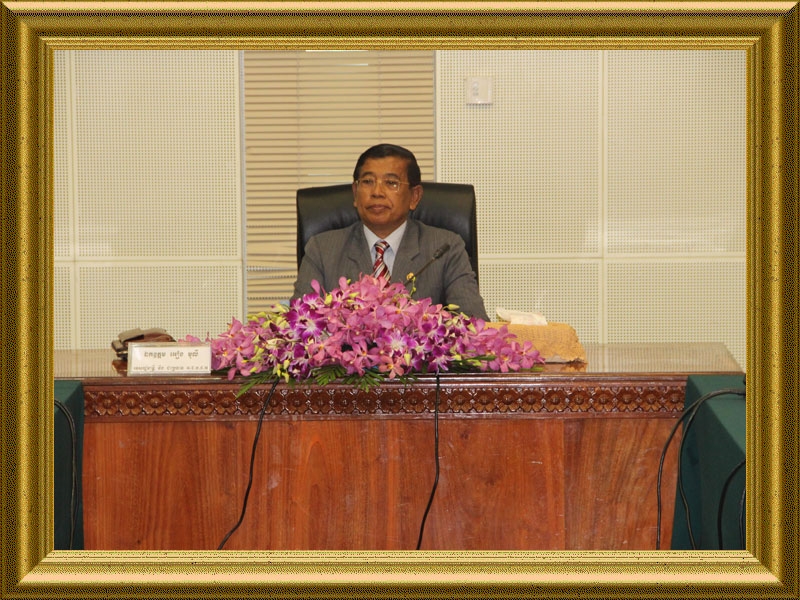
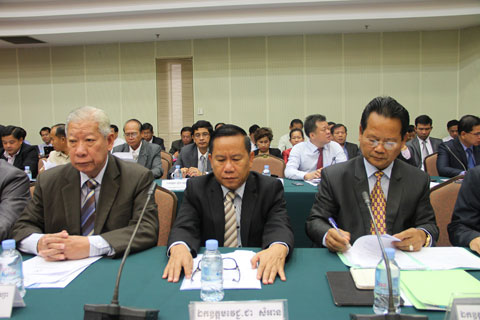
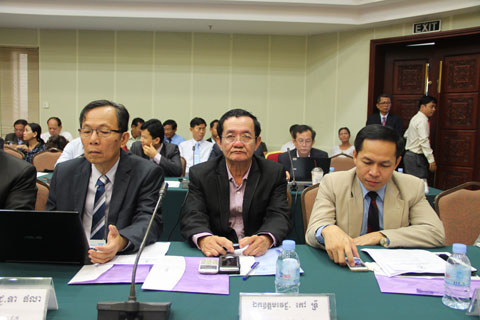
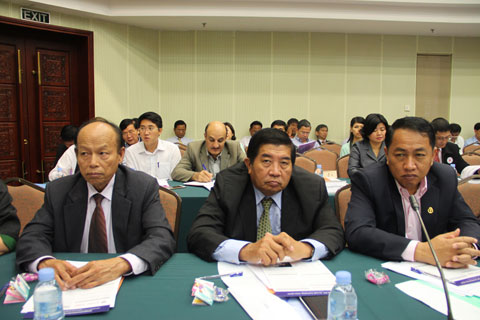
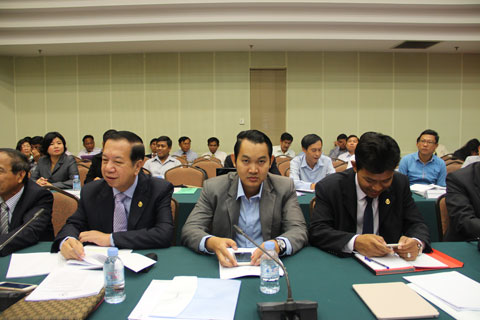
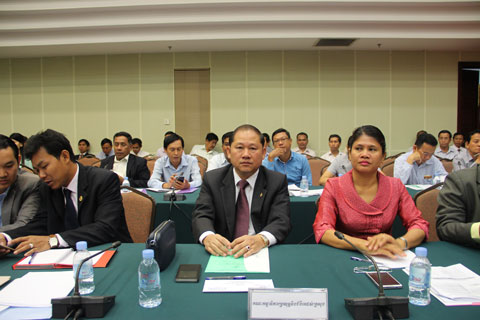
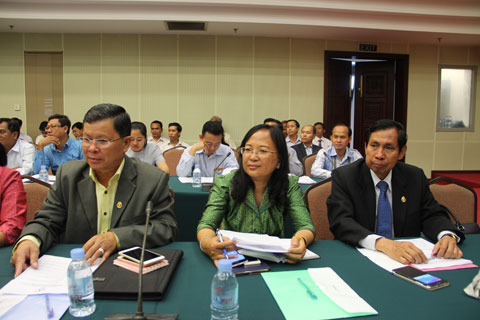
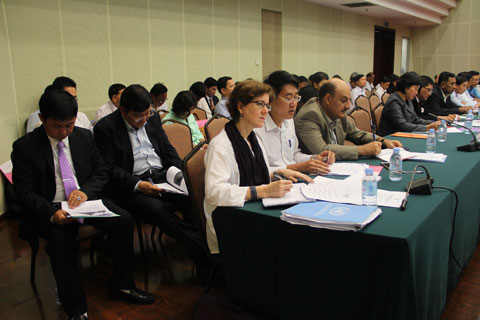
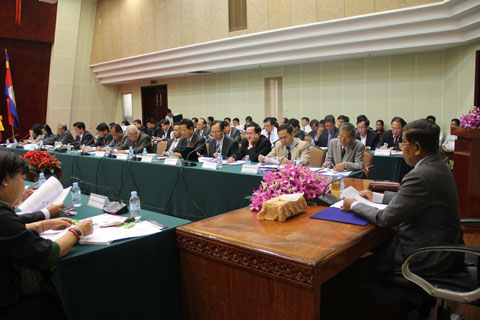
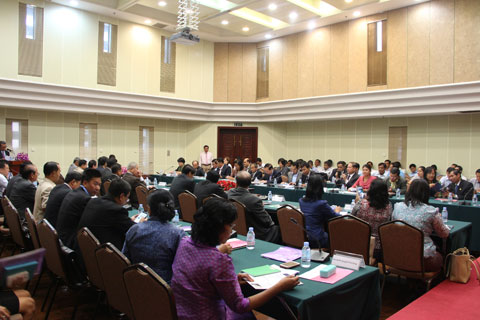
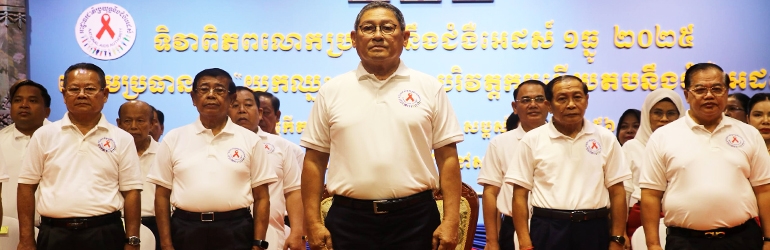
His Excellency Senior Minister Ieng Mouly, Chair of the National AIDS Authority, presides over the annual conference on AIDS response 2015
Senior Minister Ieng Mouly, Chair of the National AIDS Authority, and Chair of the Coordinating Committee of the Global Fund for Cambodia, presided over the annual conference on AIDS response 2015 at the Conference Hall of the Council of Ministers Office on the morning of November 12, 2015. Taking part in the conference were Excellences, Lok Chumteav, ladies, gentlemen, representing institutions, the Royal Government, development partners, provincial AIDS committees and secretariats, national and international nongovernmental organizations, civil society, key affected population, and researchers. The purpose of the conference was to exchange views, jointly review the situation of and response to HIV/AIDS, and seek common solutions while Cambodia, like the whole world, has resolved to set up targets to eradicate HIV in 2030. Despite noteworthy progress, HIV transmission cannot be easily eliminated. The number of people transmitted with HIV still comes up one after the other. While the problem concerning the quality of life of HIV carriers has not yet been comprehensively resolved, we are unable to reach our target people to provide them with needed prevention and care services and support. If at present, we failed in the investment in HIV/AIDS response, disaster, causing losses in human resources and financial consequences, would be inevitable due to the recurrence of the spread of HIV. The Kingdom of Cambodia’s resolve to move towards eradicating AIDS in 2030, like other countries in our world, has only 15 years left that could be broken down into three major phases:
1. The pre elimination phase between 2011 and 2020.
2. The elimination phase between 2020 and 2025.
3. The post elimination phase between 2025 and 2030.
In addition to endorsing the targets, the conference also examined the financial resources for implementing the six strategies of the Fourth National Strategic Plan, taking into consideration the context where our country has moved from being a lower middle income to an upper middle income country in 2030. The fourth broad multispectral strategic plan on HIV/AIDS response consists of the following six strategies:
● First strategy: To initiate HIV prevention, focusing on intervention to increase quality and effective coverage.
● Second strategy: To increase and maintain quality, coverage, and preservation of all the steps in the continuous care, using evidence and advice as basis.
● Third strategy: To cut down the impact of the reduction of HIV/AIDS transmission by increasing coverage with quality and effectiveness.
● Fourth strategy: To lead and coordinate concerned parties as well as mobilizing and allocating resources.
● Fifth strategy: To create support environment through better understanding and implementing law and policy.
● Sixth strategy: To create a unique system of evaluation of HIV/AIDS response.








 info@naaa.gov.kh
 +855 (0)23 885 129
 +855 (0)23 885 279
 ភាសាខ្មែរ
 English