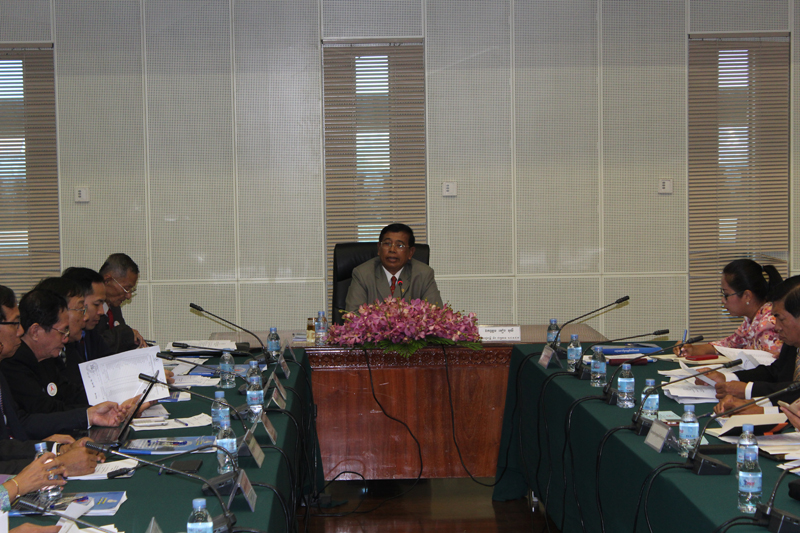
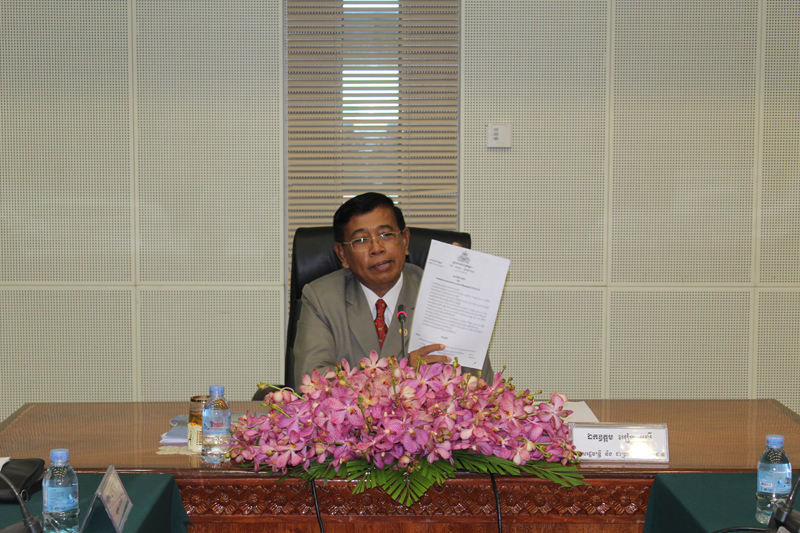
Senior Minister His Excellency Ieng Mouly, Chair of the National AIDS Authority, presides over First Plenary Meeting of National AIDS Authority 2015
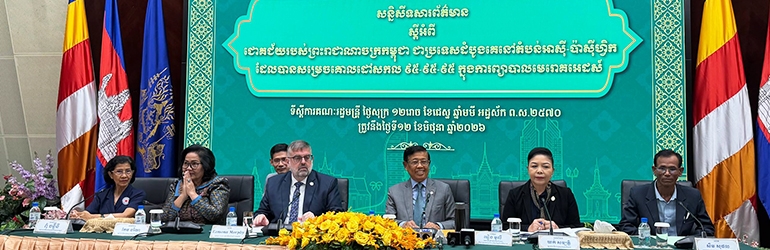
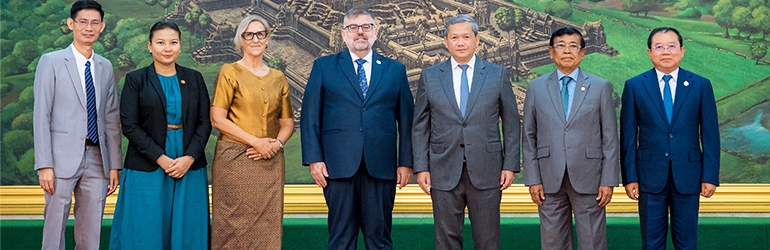
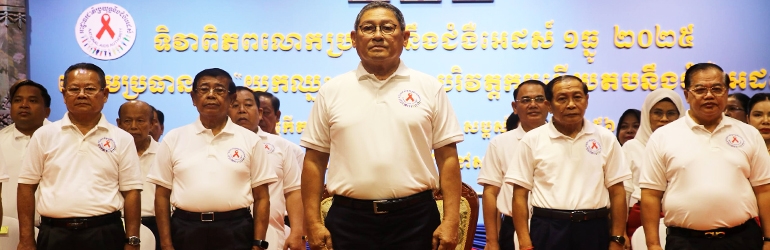
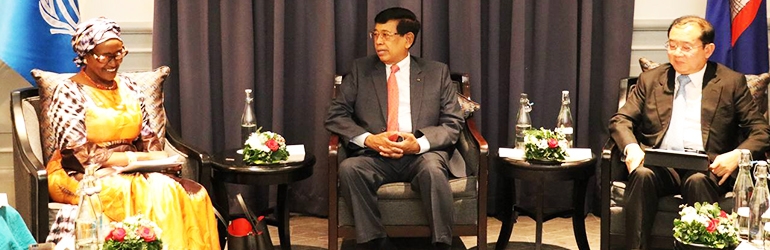
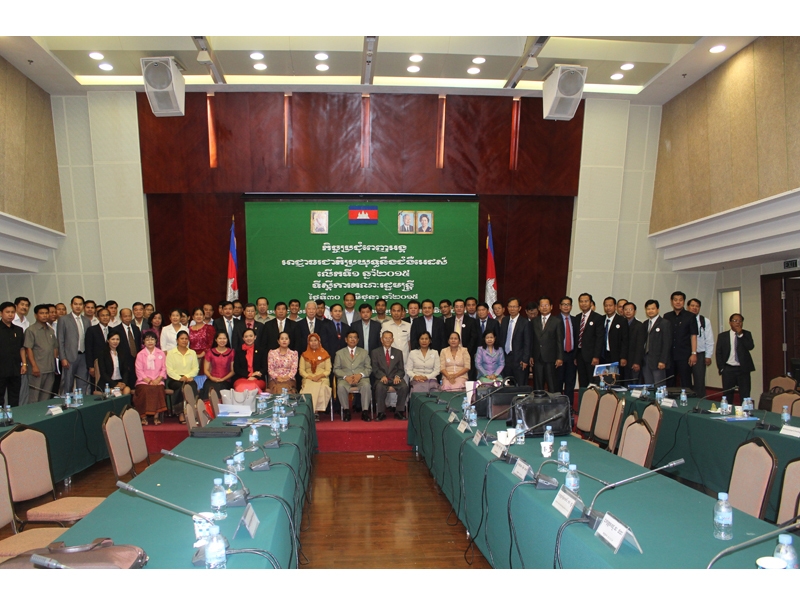
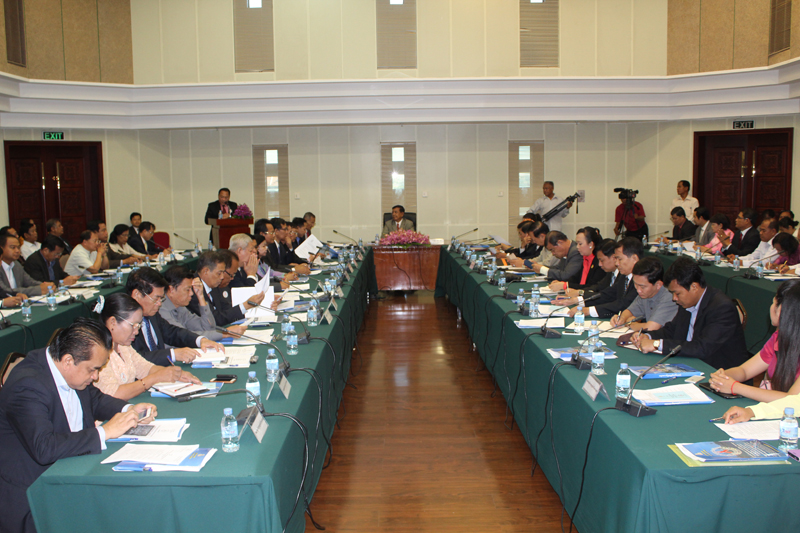
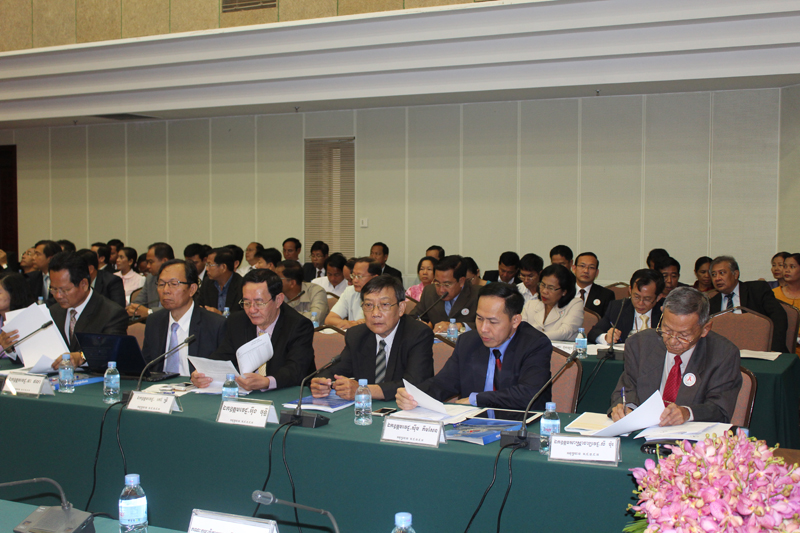
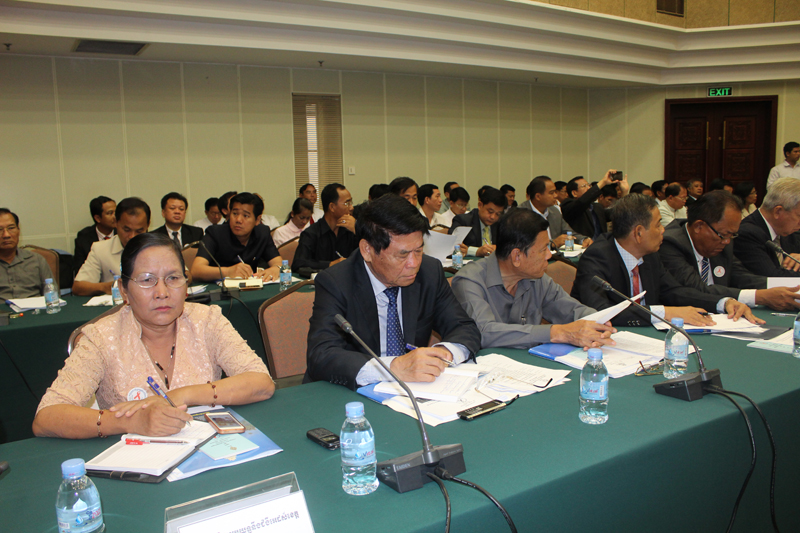
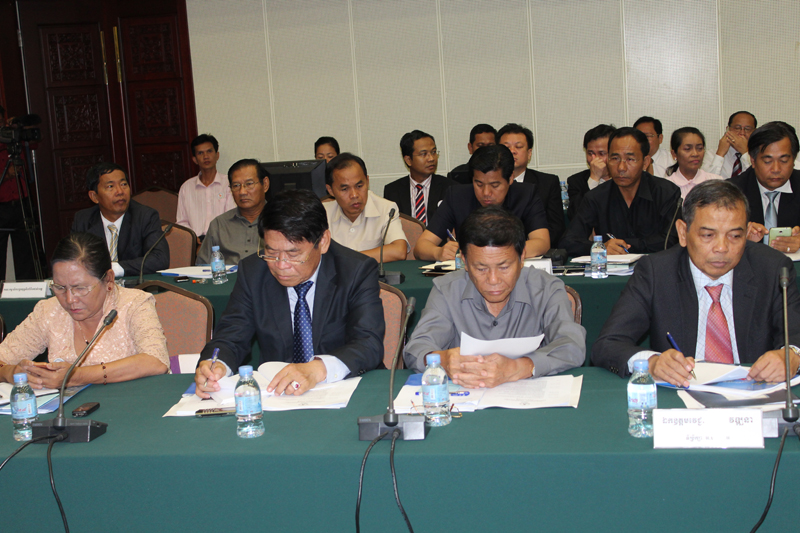
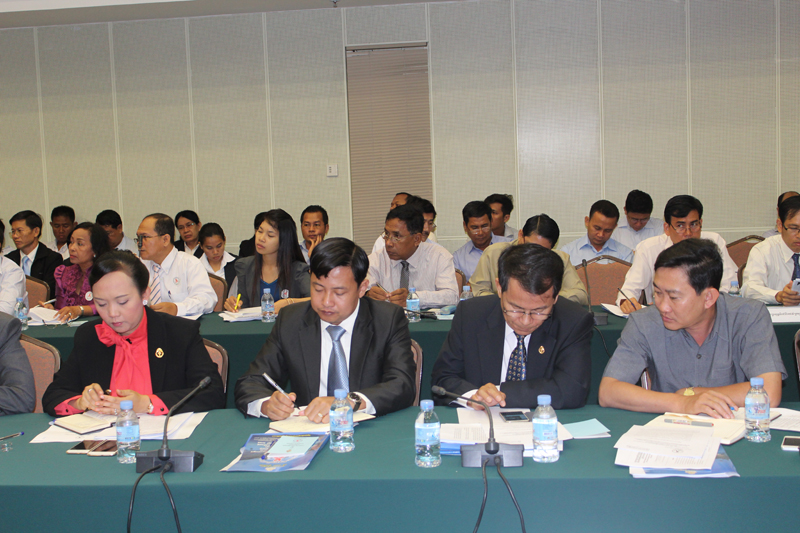
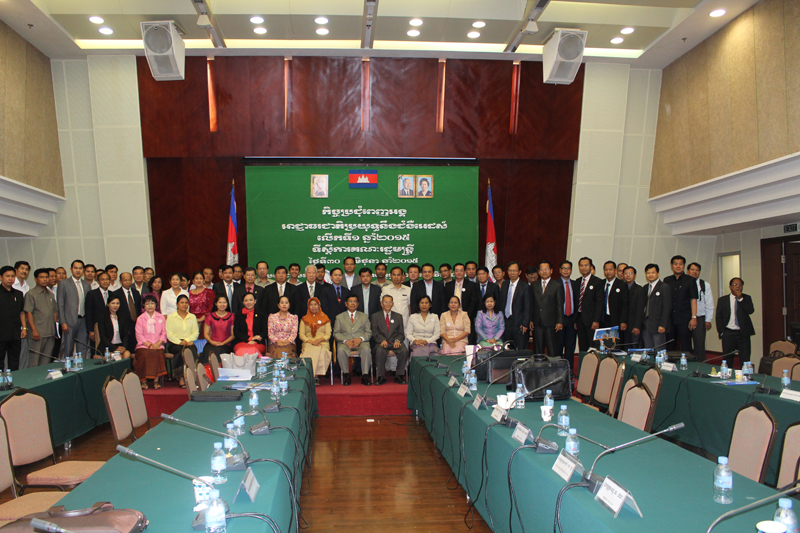
In the morning of June 30, 2015, at the Office of the Council of Ministers, Senior Minister Ieng Mouly, Chair of the National AIDS Authority, presided over the First Plenary Meeting of the National AIDS Authority 2015.
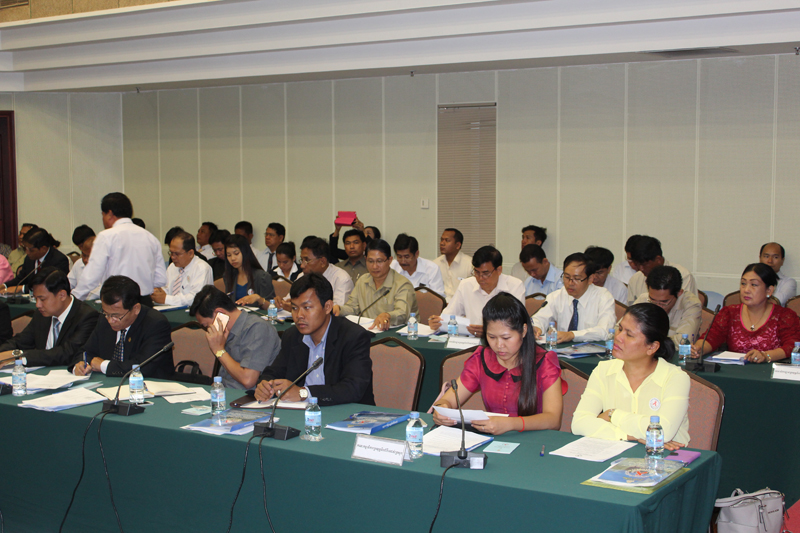
Members attending this meeting consisted ofState Secretaries and Understate Secretaries, Representatives of institutions and Members of the National AIDS Authority’s plenary meeting; Chairs of Municipal and Provincial anti-AIDS committees; Leaders and Officials of the National AIDS Authority; Representatives of the Secretariatsof the Capital and Provincial anti-AIDS Committees, as well as Representatives of Development Partners and Civil Society.
The plenary meeting of the National AIDS Authority is a regular meeting held at least twice a year, in conformity with Sub-decree No. 109 dated October 23, 2006.
The National AIDS Authority is a governmental institution, with a leading and coordinating role in making policy, national strategic plan, and guideline as well as creating conditions for strengthening multi-sectoral interventions that could provide mutual support, with the concerted goal of harmonization,to achieve our common objective and aim to fight against the spread of and respond to AIDS. The National Authority coordinates providing possibilities and encouragement to and spurs intersectoral national and subnational level administrations to compile action plans for implementing their activities and program projects under their jurisdiction and responsibilities.
It should be reminded that in 2014, our Kingdom of Cambodia had:
2,783 cases of AIDS-related deaths,
694 new cases of transmission.
72,545 people living with AIDS.
52,907 receiving treatment services.
The Senior Minister pointed out that though the rate of those living with HIV had declined significantly, more than 70,000 people living with HIV stillremained a multifarious source of transmission if the youth lacked information or were unconcerned about HIV/AIDS and if husbands were unfaithful to their wives and lacked precautions to use condoms protectingthemselves against AIDS while having multi sex partners as girlfriends or partners.This was a constant concern. Moreover, if those living with HIVwere still unaware that they were carrying HIV and transmit it to their wives or husbands, from mothers to their children, from one to another girlfriend, from one to another partner, or ifentertainment service girls transmitted it from one to another customer and a group of drug users transmitted it to another group, or those undertaking test were aware they carried HIV but still intended to transmit it to other people, our fight against and response to HIV would still remain complex as always.
It is imperative for us to contain the spread of HIV at all costs in order to halt AIDS problems from turning into burden, hampering our and our children’s and grandchildren’s socioeconomic development. The more reduction, the better, because outside assistance and the major assistance from Global Fund that we have procured are being cut down significantly and gradually. That being the case, the burden of treatment and caring will turn into the nation’s responsibility.
With financial resources being depleted, to achieve the three zero goals, the National AIDS Authority should lead the coordination for the fight against and response to AIDS by: 1) strengthening self-reliance, 2) holding sustainability program, 3) changing patterns and response mechanisms, 4) turning the concept about spending on fighting AIDS into investment in the response to AIDS, 5) ensuring concordance between policies and resources movement, national and subnational mechanism organizations, monitoring, and evaluation.
The meeting also debated and adopted determining the National Strategic Plan IV for the period of the next five years, from 2016 to 2020, to move towards meeting the 90-90-90 target indicators:
90% of HIV carriers will be aware of their HIV conditions;
90% of those diagnosed with HIV will receive sustainable treatment with antiviral medicine.
90% of those living with AIDS will receivetreatment with antiviral and nonviral medicine in 2020.
The Senior Minister, Chair of NAA reminded Institutions, Ministries, Development Partners, and Civil Society to help cooperating to implement the Royal Government’s Seven-Point Policy in order to fight against AIDS with higher effectiveness and more successes.








 info@naaa.gov.kh
 +855 (0)23 885 129
 +855 (0)23 885 279
 ភាសាខ្មែរ
 English

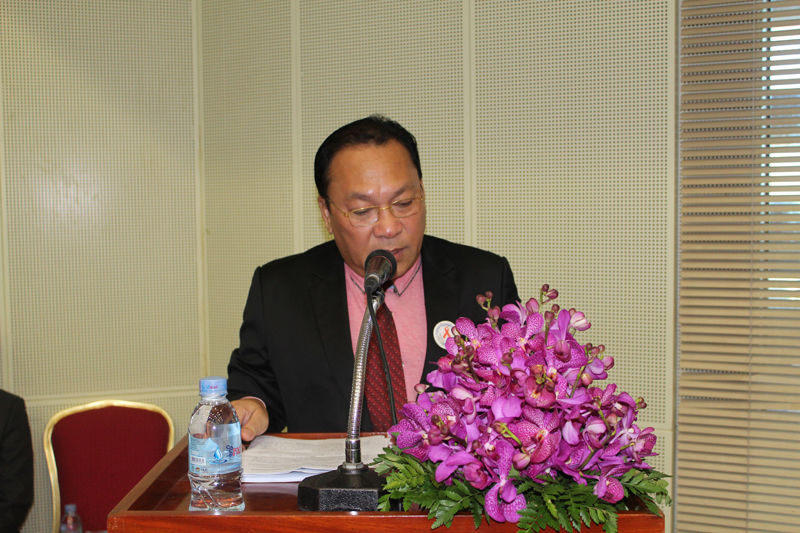
 Speech of H.E Ieng Mouly, Senior Minister Chairperson of the National AIDS Authority in the Closing Session of First Plenary Meeting 2015