On June 16, 2014,
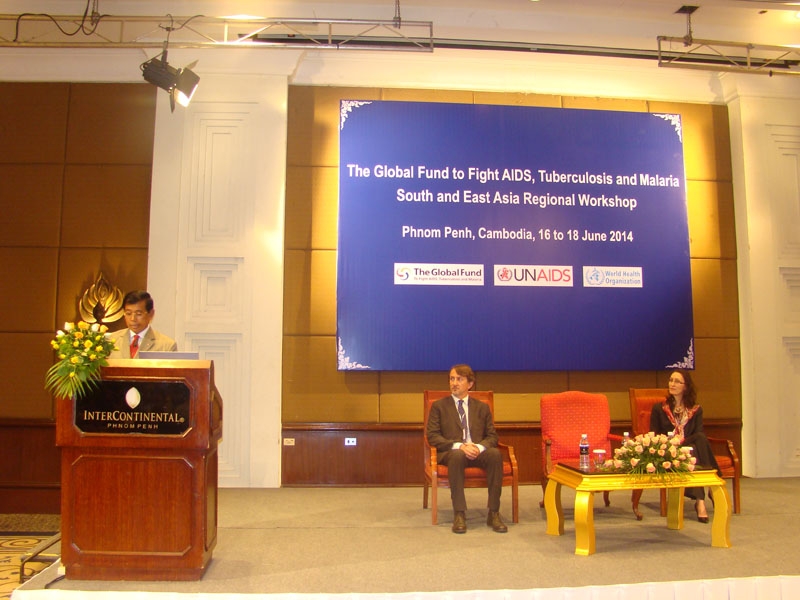
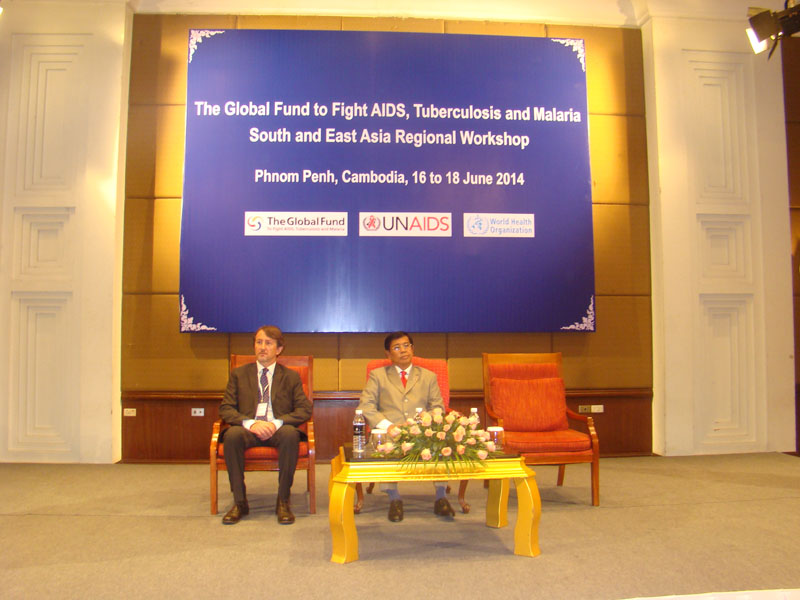
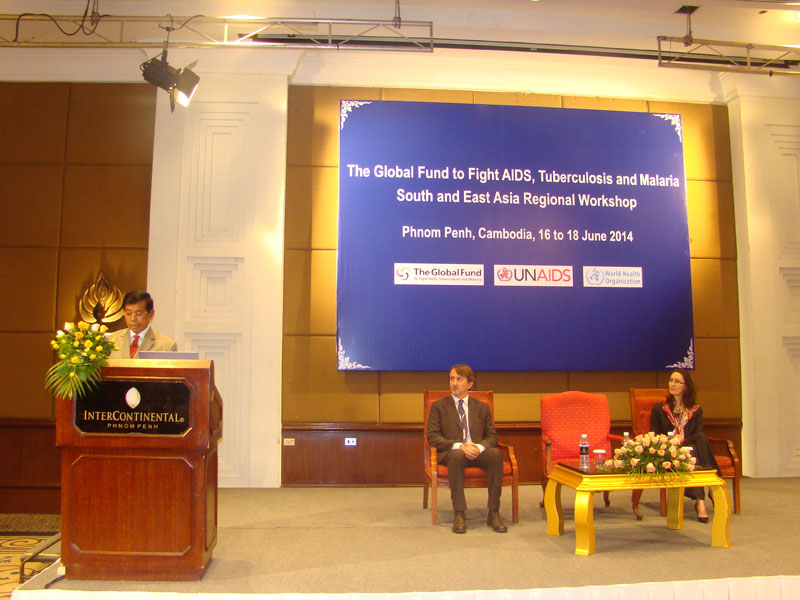
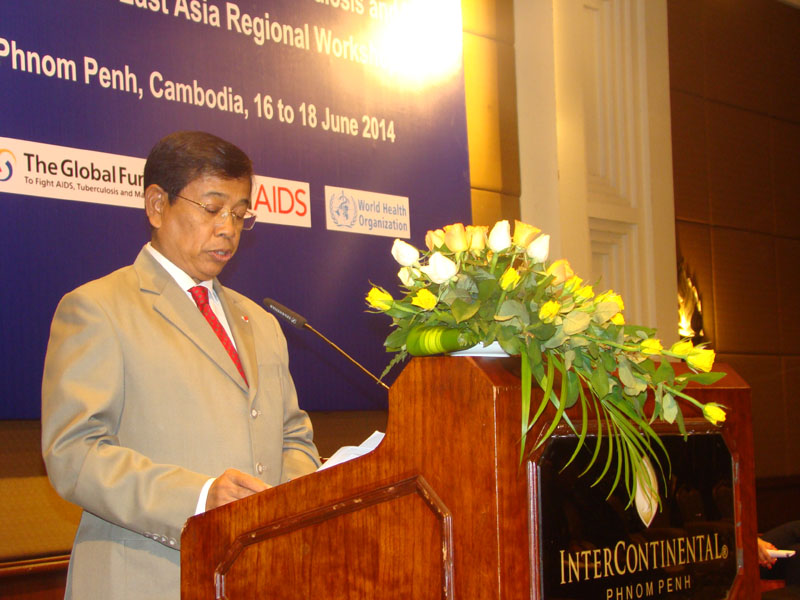
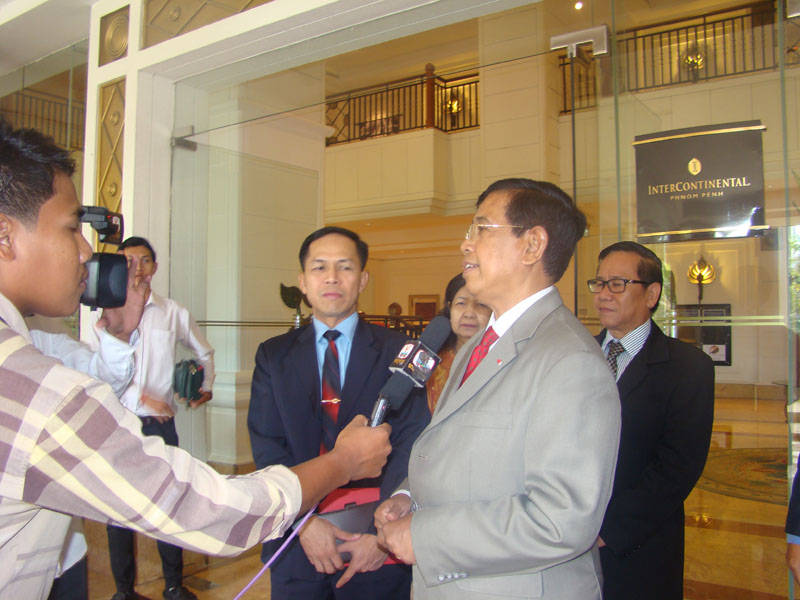
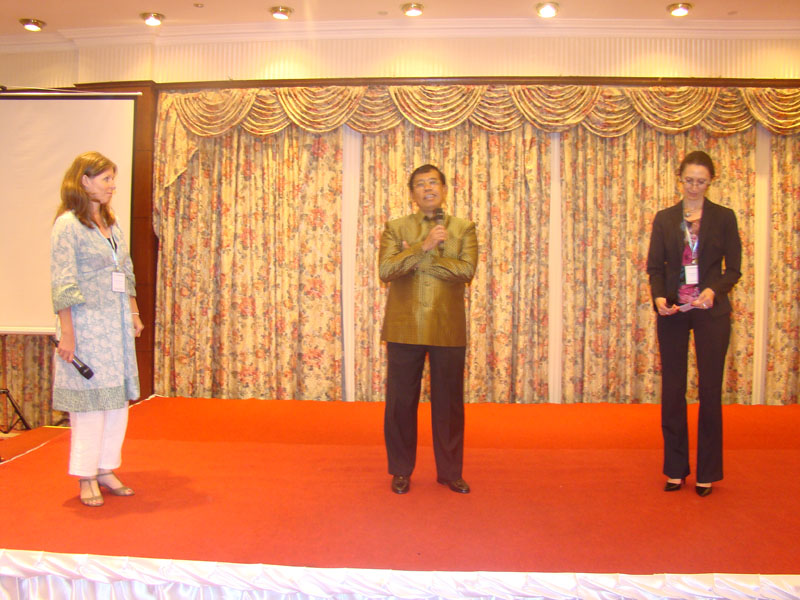
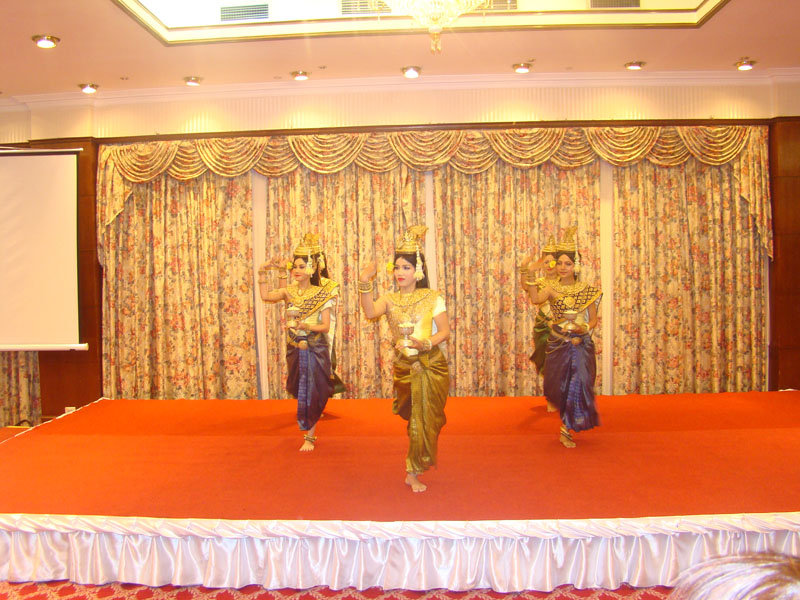
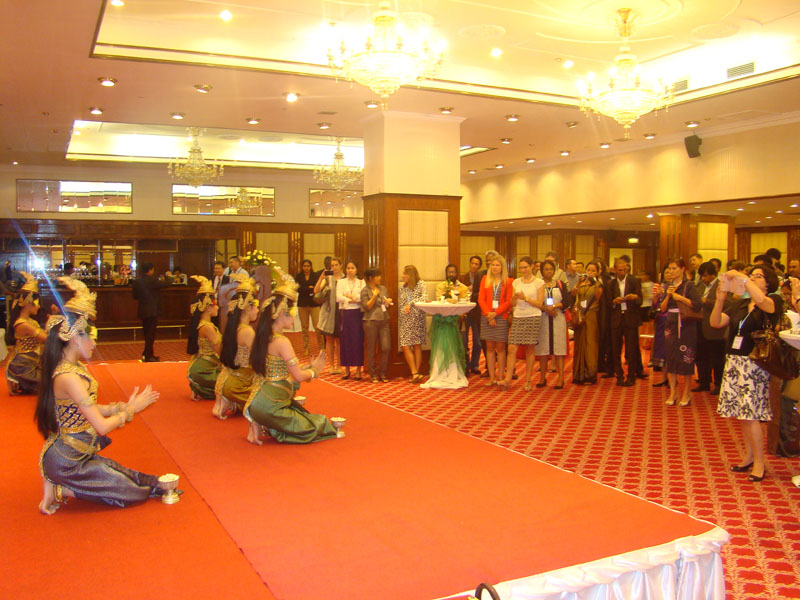
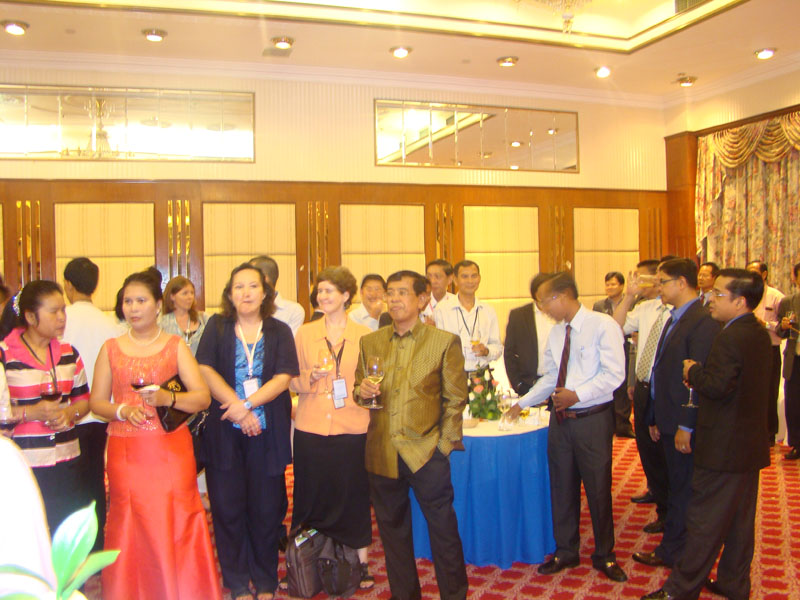
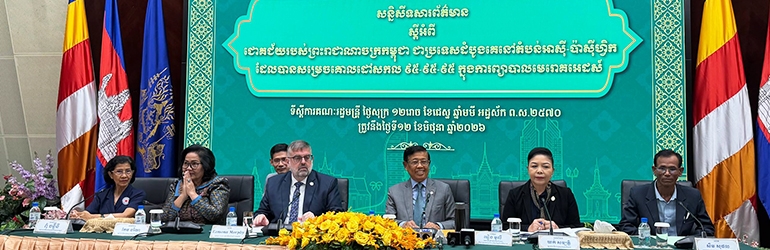
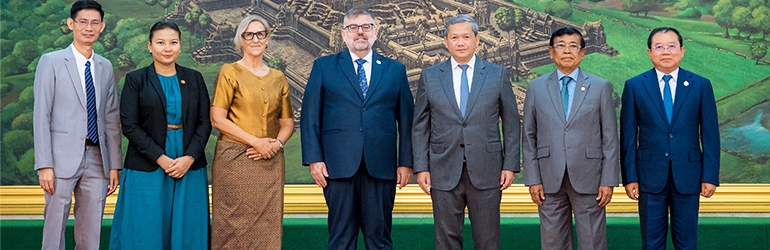
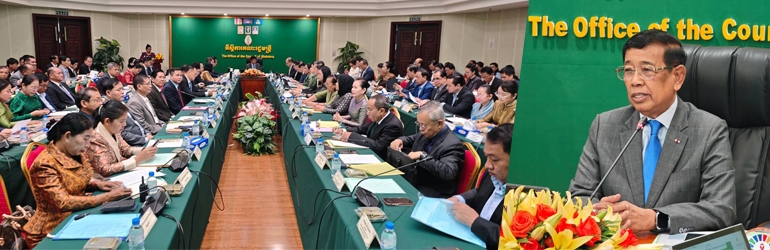
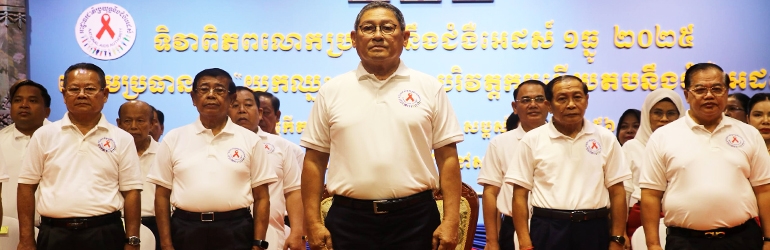
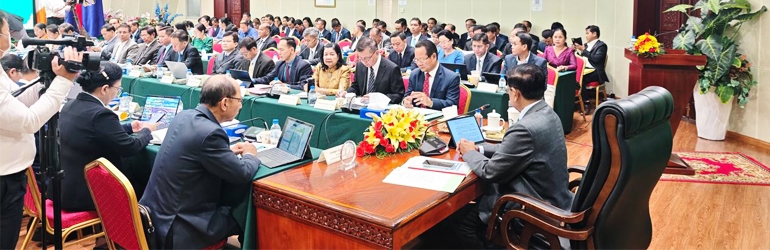
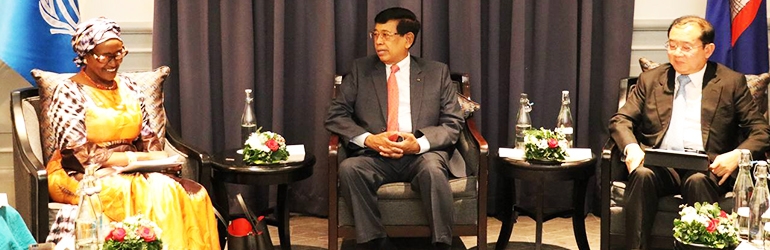
H.E. Ieng Mouly, Senior Minister, Chairman of the National AIDS Authority and Chairman of Cambodia GFATM CCC, presided over The Global Fund to Fight AIDS, Tuberculosis and Malaria South and East Asia Regional Workshop at
Intercontinental Hotel. During the opening session, H.E. read the
welcoming message of
Samdech Techo Hun Sen as the following: Cambodia had gone through a long chronic war and had severely suffered from a massive destruction of infrastructure and human resources. Since the liberation from the Khmer Rouge regime on 7 January 1979, Cambodia has been struggling to reconstruct the country toward development with empty hands and finally succeeded in achieving remarkable accomplishments. One of the motivation of the Royal Government of Cambodia is to keep continued effort on health sector that received several international awards and prideful recognitions such as: United Nations Award on Millennium Development Goal in 2010, Champion Award for the Global fight against Tuberculosis in 2014 and The 2014 Resolve Award from Global Leaders Councils for delivering on the promise of Universal Access to Reproductive Health given by ASPEN Institute of US. The Royal Government of Cambodia call on development partners to continue assisting our health sector to contribute in the RGC efforts in implementing the policy and health strategy 2008-2015.
Gender Issues Featured at Regional Meeting
June 19, 2014
PHNOM PENH, Cambodia – Gender and human rights concerns took center stage at a regional workshop held by partners in global health from South and East Asia this week.
In vibrant and searching discussions at a three-day meeting held in Cambodia, people from civil society, governments and technical agencies pointed out how the new funding model that is being fully implemented this year needs to factor in gender and human rights concerns in order to be effective. Ultimately, that means reaching more people affected by HIV, tuberculosis and malaria, and achieving impact toward defeating the epidemics.
"Why does Gender matter?" asked Hara Zacharoula, a longtime public health advocate in Southeast Asia, who spoke on behalf of the StopTB Partnership. "Because one size does not fit all."
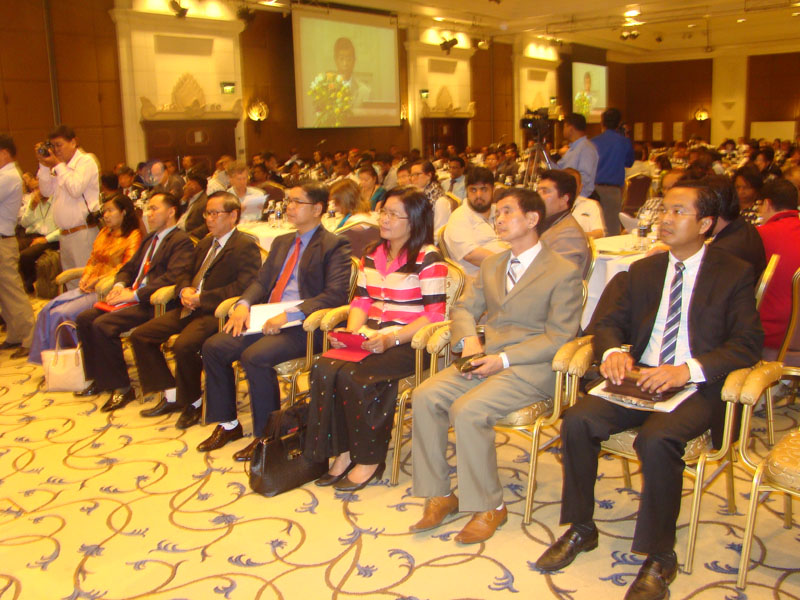
More than 280 participants from 14 countries in the region took part in the workshop, intended to explain aspects of the new funding model, discuss how to effectively conduct country dialogue, stress the importance of collecting accurate data and employ technical assistance.
Several participants highlighted areas where disease circumstances are affected by gender norms, for girls and boys, and women and men. There was broad agreement that gender inequality exists in every country, and must be recognized and factored into health interventions, if they are to be effective.
Emilie Pradichit, a Bangkok-based Human Rights and Advocacy Officer at the United Nations Development Programme, pointed to human rights concerns as critical to public health, and needing examination during country dialogue and program development.
"How do you address legal barriers?" Ms. Pradichit asked. "How do you keep policy makers informed about the issues that really matter? These are things we need to work on consistently."
Some participants at the meeting are in the process of developing concept notes to apply for Global Fund support for programs that prevent, treat and care for people affected by HIV, TB and malaria. Members of civil society repeatedly raised the issue of fighting discrimination and stigma as essential to defeating the diseases.
People also spoke at the meeting about how hard it can be to ensure that country dialogue includes representatives of people most affected by HIV, TB and malaria. There was also agreement on the importance of supporting community-based responses.
In a presentation on gender issues, Motoko Seko, Gender Adviser at the Global Fund, pointed out that only three percent of people on Country Coordinating Mechanisms in countries that implement Global Fund grants are women representing communities affected by the three diseases.
Nukshinaro Ao, Coordinator of Women of Asia Pacific Plus, exclaimed: "I didn't understand why it is so hard to get gender issues into the strategies, at a country level, in the new funding model. It is supposed to be inclusive, so many of us have been wondering: why it is so hard to get gender included? It wasn't until I saw Motoko's slide that I finally understood why."





 info@naaa.gov.kh
 +855 (0)23 885 129
 +855 (0)23 885 279
 ភាសាខ្មែរ
 English