CAMBODIAN PEER COUNSELLORS HELP MAINTAIN HIV TREATMENT DURING THE COVID-19 CRISIS
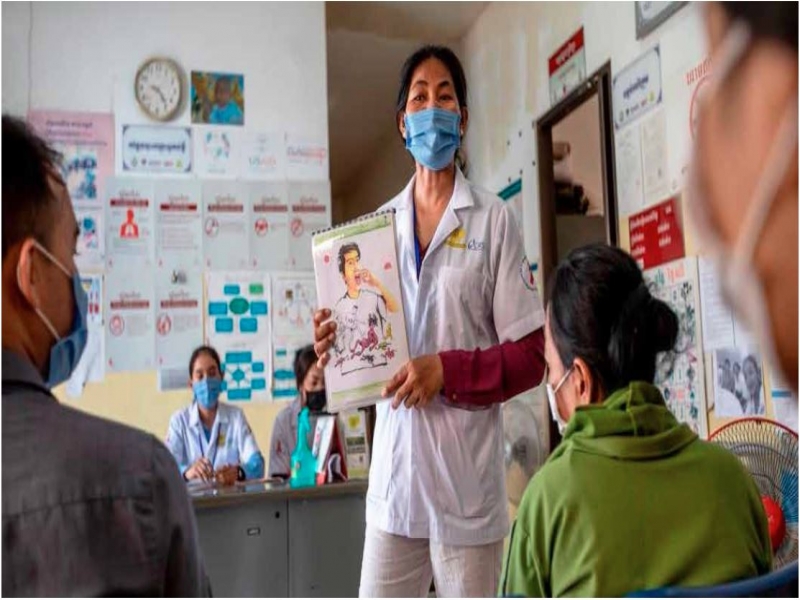
The chairs in the HIV clinic waiting room at the Khmer–Soviet Friendship Hospital in the Cambodian capital, Phnom Penh, have been carefully placed a few metres apart from each other. The patients sitting in them wear face masks to prevent the spread of COVID-19. Behind a small reception desk are a group of women living with HIV who are part of the clinic’s essential staff—members of the Antiretroviral Users Association (AUA) who provide counselling, treatment literacy and support to people living with HIV.
Theary So is an AUA counsellor who has been living with HIV for 15 years. “I provide counselling services every day,” she says. “I did not stop coming to work even though I am scared that I might get infected with COVID-19.”
The Khmer–Soviet Friendship Hospital was the first HIV treatment site in Cambodia. Many years later, it is serving as the national COVID-19 centre, the country’s flagship facility fighting the new pandemic. Theary’s family worries about her continuing to work during the COVID-19 pandemic, but she soldiers on. “They all tell me to stop working in the antiretroviral therapy clinic. My children beg me to come home early.”
She takes precautions—including the use of face masks, gloves and alcohol sanitizer—to ensure she neither acquires nor transmits the new coronavirus to her patients, her family and her neighbours. That level of vigilance has helped Cambodia largely contain the spread of COVID-19: in early June 2020, there were 126 confirmed cases in the country and zero deaths.







 info@naaa.gov.kh
 +855 (0)23 885 129
 +855 (0)23 885 279
 ភាសាខ្មែរ
 English

 CAMBODIAN PEER COUNSELLORS HELP MAINTAIN HIV TREATMENT DURING THE COVID-19 CRISIS